
Practice Area
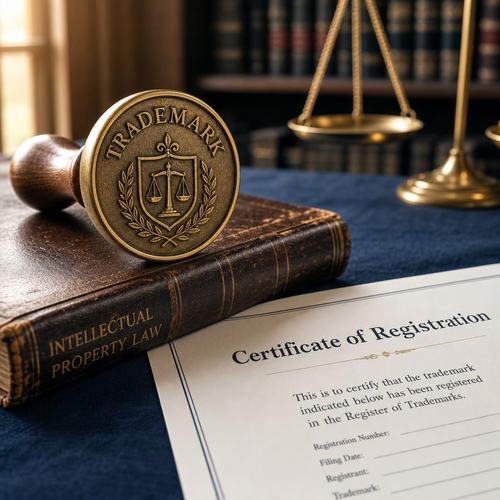
Trademark Registration
Build and defend brand equity with USPTO-savvy filings, clearance searches, and office action responses.
If you have a company, website or product, a registered trademark may be the best way to protect it. Trademark registration offers protection for your brand for longer than most other forms of intellectual property and directly protects you against direct competition.
What is a trademark?
A trademark is a form of intellectual property which consists of a sign, design, symbol or words that are associated with or identify a specific item, service or brand.
Trademarks are most often used for the names of products or businesses (McDonald's, Apple, Lexus, etc.). However, trademarks can also include things like domain names and, in certain cases, the specific way a store or storefront is designed.
What does a registered trademark protect and how long does it last?
A trademark protects a company or product name or a logo. In a phrase, trademarks protect the identity of an item or entity in commerce. Only marks officially registered with the United States Patent and Trademark Office (USPTO) are able to use the ® symbol, making the public aware of its registration.
Trademarks are the potentially longest-lasting form of intellectual property protection in the United States. Once registered, a trademark is generally protected for as long as the mark remains in use in commerce, provided the owner continues to renew the registration.
How much does trademark registration cost?
The cost of the application varies based on the type of mark, the type of application, and the number of classes the mark is being registered under. You can expect a trademark application to cost between $250 and $350 per class of goods for marks already in use at the time of application.
In terms of time, the trademark application process is usually a 9 to 15 month process. Applications completed by an attorney are not only more likely to be successful, but also more likely to resolve sooner because the required information is provided up front, reducing back-and-forth with the examining attorney.
Can I apply by myself?
While a trademark application can be completed and be successful without an attorney, the process can be difficult and time consuming — roughly 20% of USPTO applications are denied on first action. We always recommend speaking with an attorney before applying for a trademark or any form of intellectual property protection.
Trademark clearance search
A trademark clearance search is a structured review of existing marks to determine whether the name, logo or slogan you intend to use is actually available. It looks well beyond a simple internet search: we examine the USPTO register, state records, and real-world commercial use to understand who else may already have rights in something close to your mark.
Searching before filing matters because trademark rights in the United States are largely built on use, not just registration. Another business may hold enforceable rights in a similar mark without ever having filed an application. A clearance search is the only reliable way to see that landscape before you commit to a brand, print packaging, or invest in advertising.
A thorough search commonly surfaces conflicts such as existing federal registrations, pending USPTO trademark applications, common law use by unregistered businesses, state trademark filings, corporate and assumed business names, domain names and social handles, and marks that are not identical but close enough in sound, appearance or meaning to create a likelihood of confusion.
Identifying those issues early is far less expensive than discovering them later. A conflict found before filing can save the cost of a refused application, the disruption of rebranding after launch, the legal exposure that comes with a cease-and-desist letter, and the filing fees spent on an application that was never likely to register in the first place.
We do not simply hand over a search report. We review the results with you, explain which conflicts are genuine risks and which are noise, and recommend a path forward — whether that means proceeding to a USPTO trademark application as planned, narrowing the goods and services, adjusting the mark, or choosing a stronger alternative before any filing is prepared.
Our process
- 01
An initial consultation to determine exactly what you need
- 02
An in-depth search of all registered, pending and non-registered trademarks that may be similar to your intended mark
- 03
A follow-up strategy call to discuss the search report, all potential problems and next steps
- 04
Draft and file your trademark application
- 05
Follow the application through the USPTO process and respond to any office actions
Frequently asked questions
- How long does trademark registration take?
- Most applications take roughly 9 to 15 months from filing to registration. The USPTO does not assign an examining attorney for several months, and any refusal or opposition can extend the timeline further.
- What is a trademark clearance search?
- It is a review of federal registrations, pending applications, state filings and unregistered commercial use to determine whether your intended mark is available before you file or launch.
- Can I use the ™ symbol before my trademark is registered?
- Yes. The ™ symbol simply signals that you claim rights in a mark used in commerce. No registration or application is required to use it.
- When can I use the ® symbol?
- Only after the USPTO has actually issued a registration, and only for the goods and services covered by that registration. Using it earlier can jeopardize your rights.
- What happens if the USPTO refuses my application?
- You receive an office action explaining the refusal and generally have three months to respond. Many refusals are procedural and can be overcome with a well-supported written response.
- Does registering my LLC or corporation protect my business name?
- No. Forming an entity only reserves that name with the state for corporate filing purposes. Brand protection comes from trademark rights, not from your LLC or corporate registration.
- Can two businesses own the same trademark?
- Yes, when the goods, services or markets are different enough that consumers are not likely to be confused. Identical marks routinely coexist across unrelated industries.
- How long does a trademark registration last?
- Indefinitely, so long as the mark stays in use and you file the required maintenance documents between years five and six, and then every ten years.
- Do I need a lawyer to register a trademark?
- Not legally, unless you are a foreign-domiciled applicant. Practically, about a fifth of applications are refused on first action, and attorney-prepared filings tend to register faster and with fewer complications.
"Knowledgeable, responsive, and they got results when other firms told us there was nothing they could do."
— Verified Client Review
Other practice areas

Copyright Registration
Protect creative work, listings, and content with timely, defensible filings — and use them as a sword when others copy you.

Amazon Suspensions & Listing Reinstatements
Aggressive reinstatement appeals, IP complaint resolution, and held funds recovery for Amazon sellers.

Amazon Arbitration
When Amazon withholds your funds, arbitration is your remedy — and we file them on a consistent basis.