Likelihood of Confusion (Section 2(d))
The examiner believes your mark is too similar to an existing registration or earlier application for related goods or services.
Avoid this next time with a trademark search attorney → Attorneys
USPTO OFFICE ACTIONS
Got a refusal from the USPTO? Our trademark office action attorneys review the examiner's objections, build a response strategy, and file your trademark office action response before the deadline.
Missed deadlines mean abandoned applications.
275+ five-star reviews
293 trademarks registered
30+ years combined experience
Partner-handled, no handoffs
Where this fits
A USPTO office action is an official letter from the examining attorney assigned to your USPTO trademark application. It explains the legal problems or requirements that must be resolved before your mark can register. An office action isn't a final rejection. It's your chance to fix the issues or argue that the examiner got it wrong, and a strong trademark office action response is often what keeps your trademark registration on track.
Some office actions raise procedural issues, like an unclear description of goods and services or a missing disclaimer. Others raise substantive refusals, like likelihood of confusion with an existing mark or a finding that your mark is merely descriptive. Procedural issues can often be fixed with an amendment. Substantive refusals usually require legal argument and evidence.
For most U.S. applications, you have three months from the issue date to respond, and you can request one three-month extension for a USPTO fee. The exact deadline is stated in your office action. Because filing a trademark response late isn't an option, it's important to start early.
If no response is filed by the deadline, the USPTO treats the application as abandoned, and the filing fees you paid aren't refunded. In some cases an abandoned application can be revived if the delay was unintentional, but strict time limits apply. A trademark office action attorney can tell you quickly where you stand.
For an intent-to-use application after a notice of allowance, a statement of use has separate filing deadlines.
The examiner believes your mark is too similar to an existing registration or earlier application for related goods or services.
Avoid this next time with a trademark search attorney →The examiner believes your mark simply describes a quality or feature of your goods or services.
The examiner rejected the proof of use you submitted, often because it looks like a mockup or doesn't show the mark with the goods.
See specimen examples →Common for apparel: the mark appears as decoration rather than a brand.
Class 25 specimen guide →Your description is too vague or listed in the wrong class.
Check your classes →The examiner requires you to disclaim a descriptive or generic word in your mark.
Your application is on hold, often because of an earlier pending application or another proceeding.
The examiner wasn't persuaded by an earlier response. Your options narrow, so strategy matters.
| Comparison | Non-final office action | Final office action |
|---|---|---|
| What it means | The examiner's first set of issues with your application. | The examiner maintained one or more refusals after your earlier response. |
| Response deadline | Generally 3 months, with one 3-month extension available for a USPTO fee. | Generally 3 months, with one 3-month extension available for a USPTO fee. |
| Your options | Argue against the refusal, amend the application, or submit new evidence or specimens. | Comply with the remaining requirements, file a request for reconsideration, and/or appeal to the Trademark Trial and Appeal Board (TTAB). |
| If unresolved | The examiner may issue a final office action. | The application is abandoned unless you appeal or the issues are resolved. |
Some office actions are simple to fix. Others can make or break your trademark registration. Here's how to tell the difference.
Response in 2–3 business days
We explain the refusal, your options, and our recommended approach.
Legal arguments, evidence, and amendments, filed before your deadline.
We track the examiner's review and handle any follow-up.
Millions
IN HELD FUNDS RELEASED
200+
Amazon Accounts Reinstated
203
Companies Created
293
Trademarks Registered
275+
Five-Star Reviews
30+
Years of Experience
Knowledgeable, responsive, and they got results when other firms told us there was nothing they could do.
— Verified Client Review
It's an official letter from the USPTO examining attorney explaining problems with your trademark application that must be resolved before the mark can register. It isn't a final rejection. You can respond with amendments, arguments, or new evidence.
For most U.S. applications, you have three months from the issue date, and you can request one three-month extension for a USPTO fee. Always check the deadline stated in your office action.
The application is treated as abandoned and the filing fees aren't refunded. In some cases it can be revived if the delay was unintentional, but strict time limits apply, so contact a trademark attorney right away.
No. Many applications receive at least one office action. It means the examiner found issues that need to be addressed, and many of them can be resolved with the right response.
You can, and simple procedural issues are often manageable on your own. Substantive refusals, like likelihood of confusion or descriptiveness, require legal arguments and evidence, and a weak response can lead to a final refusal. If your refusal is substantive, have a trademark lawyer review it before you respond.
You can comply with the remaining requirements, file a request for reconsideration, and/or appeal to the Trademark Trial and Appeal Board. These options have their own deadlines, so act quickly.
It varies with the USPTO's workload and the issues involved. After you respond, the examiner will either approve the application for publication, issue a new office action, or issue a final refusal.
No one can guarantee approval. What we can do is give you an honest assessment of your options and file the strongest response the facts support.
Dealing with a specimen or classification refusal?
 Trademarks
August 12, 2026
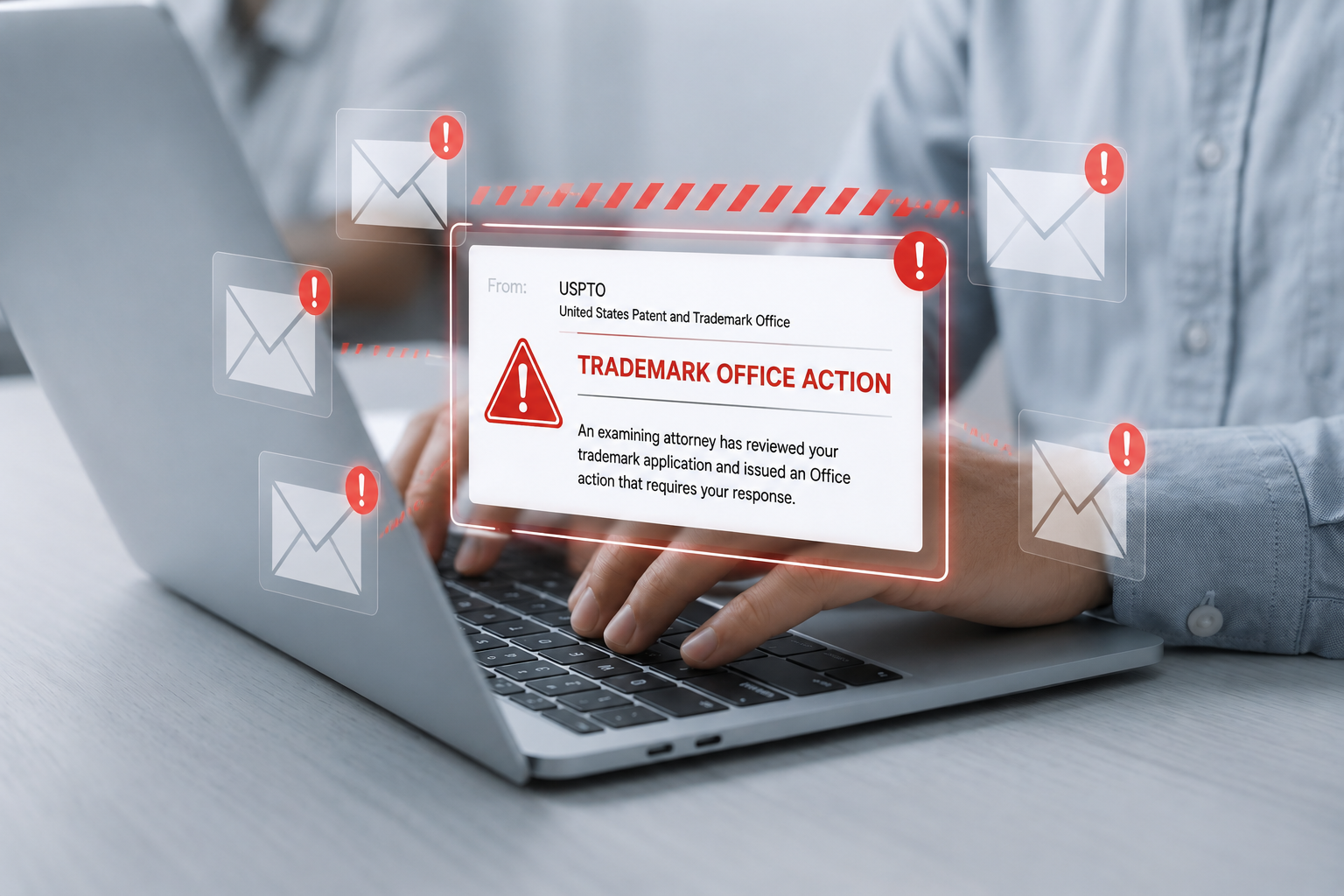
Received a trademark office action? Learn what it means, common reasons the USPTO issues one, response deadlines, and what to do next.
Read more Trademarks
September 10, 2026
Received a trademark specimen refusal? Learn why the USPTO rejects specimens, what evidence may be acceptable, and how applicants can respond.
Read more Trademarks
August 12, 2026
How long does trademark registration take? Learn the USPTO timeline, what can cause delays, and what to expect after filing your application.
Read moreLet's get your application back on track.
Send us your office action today. Our team will review your inquiry. We aim to respond to inquiries within 2–3 business days.
Attorney Advertising. Prior results do not guarantee a similar outcome.