Art can carry meaning beyond its appearance. For many Native American artists and Nations, creative works can reflect cultural identity, community histories, knowledge, and traditions passed down through generations. These expressions may also carry responsibilities regarding who can create, share, or reproduce them.
But what happens when someone copies an artist's original work without permission? What if a company uses a traditional design on merchandise? And how much protection does U.S. copyright law actually provide?
Understanding Native American art copyright requires an important distinction: copyright law can protect original creative works, but it does not necessarily protect the cultural traditions from which those works originate.
For Native American artists and communities interested in exploring intellectual property protection, several legal options may be available. Each addresses different concerns, and each has limitations.
What Types of Native American Art Can Be Copyrighted?
Under U.S. copyright law, original works of authorship generally receive protection once they are fixed in a tangible medium of expression.
This means that qualifying creative works can receive copyright protection without first being registered with the U.S. Copyright Office.
Examples of potentially copyrightable works include:
- Original paintings, drawings, illustrations, and sculptures.
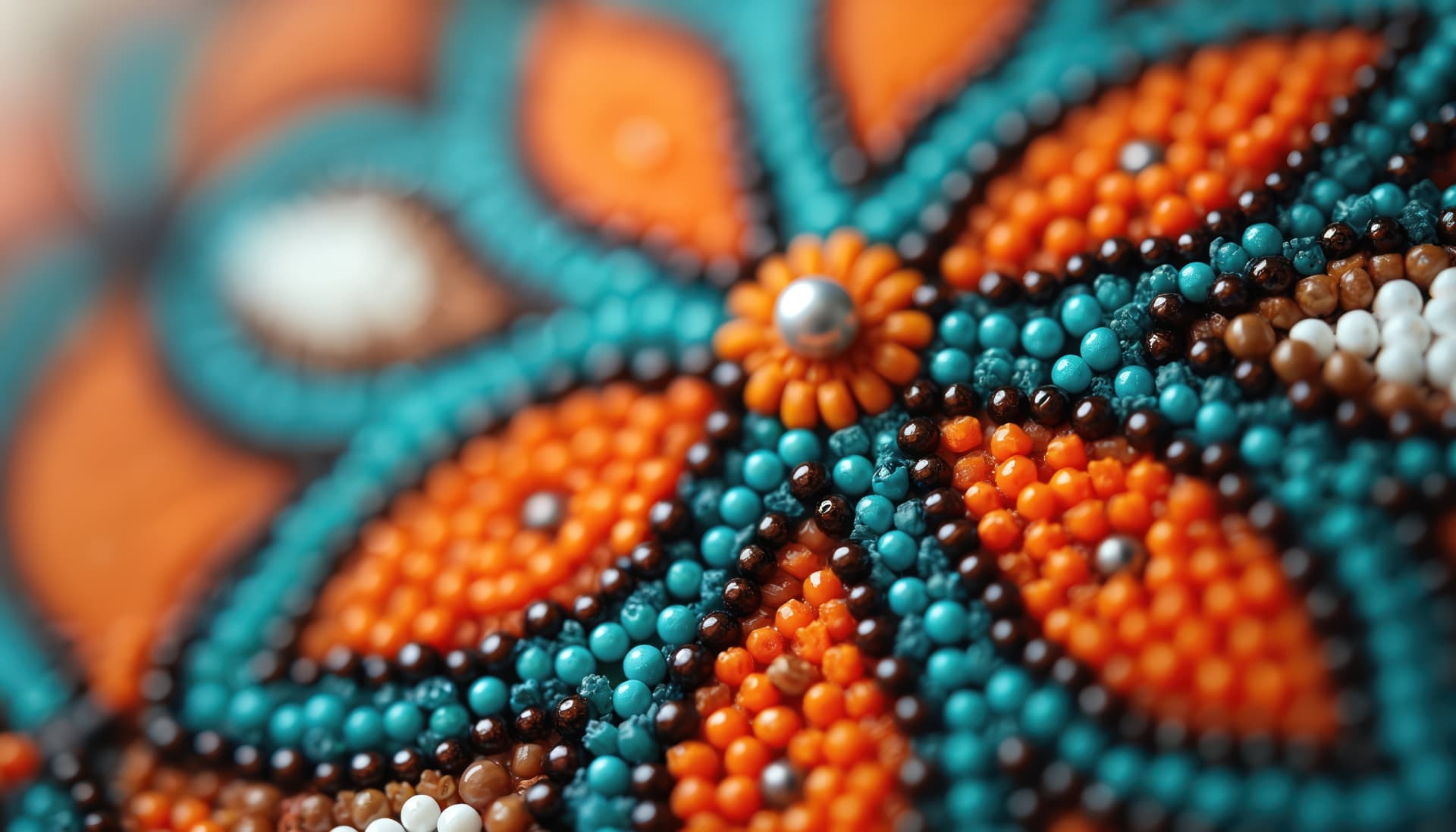
- Original beadwork patterns, textile designs, and other artistic designs.
- Photographs, films, and digital artwork.
- Original musical compositions and sound recordings.
- Written stories, poetry, and other literary works.
Copyright protects the original expression within these works, rather than the underlying ideas, artistic techniques, or cultural traditions.
For example, a Native American artist who creates an original floral illustration may own copyright in that particular illustration. However, that copyright would not automatically give the artist exclusive rights over every traditional floral motif associated with their community.
The distinction matters because copyright protects an artist's original creative contributions without necessarily granting ownership over the cultural elements that inspired them.
Can Traditional Native American Designs Be Copyrighted?
Traditional Native American designs may not qualify for copyright protection in the same way as newly created artwork.
Many cultural expressions have been developed, maintained, and shared across generations. They may include traditional patterns, ceremonial songs, oral histories, symbols, and artistic practices.
U.S. copyright law generally requires original authorship and provides protection for a limited period. These requirements can create difficulties when applied to expressions maintained collectively over generations.
In its article, Safeguarding Indigenous Culture from Appropriation: How Copyright Law Fails to Protect Indigenous Cultural Expressions, the Association on American Indian Affairs examines how conventional copyright principles can conflict with Native Nations' relationships to cultural heritage.
The Association identifies several concerns, including the law's limited recognition of collective cultural ownership, the expiration of copyright protection, and the commercial use of traditional expressions without community consent.
An important distinction remains: a traditional design may fall outside copyright protection while a contemporary artist's original interpretation of that design may qualify for protection.
Copyright in the newer artwork generally extends only to its original elements. It does not automatically establish ownership over the underlying tradition.
Source: Association on American Indian Affairs — Safeguarding Indigenous Culture from Appropriation
What Is Indigenous Cultural and Intellectual Property?
Indigenous Cultural and Intellectual Property, often abbreviated as ICIP, is a broad concept concerning Indigenous peoples' relationships to their cultural heritage, traditional knowledge, and creative expressions.
It may encompass traditional artwork, songs, stories, ceremonies, designs, languages, and other forms of cultural knowledge.
Unlike conventional copyright law, which generally focuses on legally recognized authorship and ownership, Indigenous cultural stewardship may involve responsibilities and authority held by families, clans, communities, or Nations.
The World Intellectual Property Organization (WIPO) recognizes that traditional cultural expressions can raise questions that existing intellectual property systems do not fully address.
ICIP should not, however, be confused with a single enforceable U.S. intellectual property right. It describes a broader set of interests and approaches, while available legal protections depend on the applicable laws and circumstances.
Different Native Nations may also maintain their own cultural protocols concerning access, permission, reproduction, and sharing.
Consequently, the absence of federal copyright protection does not necessarily mean that a cultural expression is considered available for unrestricted use by the community from which it originates.
Legal permission and cultural permission are not always the same.
What Happens When Someone Copies a Native American Artist's Work?
Unauthorized copying can affect Native American artists both economically and culturally.
In April 2024, ICT published an article by Mary Annette Pember describing the experiences of Sarah Agaton Howes, an Ojibwe artist and citizen of the Fond du Lac Band of Lake Superior Chippewa.
Howes discovered that her original artwork had been reproduced and offered for sale by another party.
Her experience illustrates how unauthorized reproductions can raise concerns beyond lost sales. Original artwork can also reflect personal identity, cultural relationships, and the artist's connection to their community.
From a legal perspective, copying a protected original work may constitute copyright infringement, depending on the circumstances and whether an exception or defense applies.
Possible responses may include contacting the party responsible, submitting a copyright takedown notice to an online platform, negotiating a resolution, or considering legal action.
These are potential options rather than required steps. The appropriate response depends on the rights involved, the nature of the use, and the artist's individual circumstances.
Source: ICT — Stolen Artwork? Here's How to Protect Your Work
What Legal Protections Exist Beyond Copyright?
Copyright is one form of intellectual property protection, but it is not the only legal framework that may be relevant to Native American artists, businesses, and communities.
Copyright Registration
Copyright protection generally begins automatically when an eligible original work is created and fixed.
Registration with the U.S. Copyright Office provides additional legal benefits. For U.S. works, registration or refusal of registration is generally required before filing a federal copyright infringement lawsuit.
Timely registration can also affect eligibility for certain statutory damages and attorney's fees.
Registration protects qualifying original expression. It does not expand copyright to cover traditional cultural elements that are otherwise unprotectable.
Trademarks
Trademark law protects qualifying names, logos, symbols, and other identifiers used to distinguish the source of goods or services.
For Native American artists and businesses, trademark protection may be relevant to a distinctive brand name, business logo, or other source-identifying element.
However, trademark registration does not automatically establish ownership over a traditional cultural design or symbol in every context.
Trademark rights depend on factors such as distinctiveness, use, the goods or services involved, and potential conflicts with existing rights.
The Indian Arts and Crafts Act
The Indian Arts and Crafts Act (IACA) is a federal truth-in-advertising law addressing misrepresentations in the marketing of American Indian and Alaska Native arts and crafts.
The law prohibits selling or offering covered products in a manner that falsely suggests they were made by an Indian artist, a particular tribe, or an Indian arts and crafts organization.
For purposes of the Act, the definition of an Indian artist includes members of federally or officially state-recognized tribes and individuals certified as Indian artisans by a tribe.
For example, a seller may violate the Act by falsely marketing jewelry as made by a particular Native Nation when it was not produced by a qualifying artist.
The Act does not, however, create a general copyright over Native American designs or prohibit every instance of cultural imitation.
Its primary focus is truthful representation in the marketplace.
Source: U.S. Department of the Interior — Indian Arts and Crafts Act
Licensing and Agreements
Licensing agreements and other contracts may provide additional options when an artist or community chooses to authorize particular uses of creative material.
Depending on the circumstances, an agreement may address:
- Which artwork or materials may be reproduced.
- How the work may be used commercially.
- Compensation, royalties, or other agreed terms.
- Attribution and identification of the creator.
- Restrictions on alterations, distribution, or further licensing.
Contractual arrangements may also address cultural protocols or consultation requirements agreed upon by the parties.
However, a license cannot grant rights that the licensing party does not possess, and contractual protections generally depend on the agreement and the parties bound by it.
These arrangements may be useful in certain collaborations, but they are not substitutes for a community's own decisions about whether particular cultural expressions should be shared.
How Can You Tell Whether a Design Is Copyrighted?
Determining whether a particular design is protected by copyright is not always straightforward.
A copyright notice or registration record may help identify a claimed owner, but the absence of either does not necessarily mean a work is unprotected.
Questions that may be relevant include:
- Is the design an original creative work or an inherited traditional expression?
- Does the work contain independently created artistic elements?
- Who created those original elements?
- Has the copyright been transferred or licensed?
- Is the work still within its applicable copyright term?
A search of the U.S. Copyright Office's public records may provide useful information about registered works, although it cannot conclusively establish that every unregistered work is free to use.
For Native American designs, the legal inquiry may also be distinct from questions concerning cultural authority and permission.
What Options May Be Available to Native American Artists and Communities?
There is no single intellectual property strategy that applies to every Native American artist or Nation.
Depending on the work and the circumstances, available options may include copyright registration, trademark protection, contractual arrangements, platform takedown procedures, or reporting suspected violations of the Indian Arts and Crafts Act.
Some Native Nations also maintain their own cultural governance practices concerning the use and sharing of traditional knowledge.
The Native American Rights Fund has participated in international discussions concerning Indigenous intellectual property, including the relationship between cultural heritage, consent, and self-determination.
These discussions illustrate why protecting original artwork and respecting a Nation's authority over its cultural heritage are related but distinct matters.
Not every community wishes to commercialize, register, or publicly document its cultural expressions. Some materials may be subject to specific protocols concerning access or disclosure.
Understanding the available legal frameworks can help clarify what protections may exist without assuming that any particular course of action is appropriate.
Understanding the Limits of Copyright Protection
U.S. copyright law can provide meaningful protections for original artwork, but it does not address every concern involving Native American cultural heritage.
Traditional designs may lack conventional copyright protection. Copyright ownership may differ from community stewardship. A commercial use may be legally permissible under copyright law while remaining inconsistent with a Native Nation's cultural protocols.
These limitations are among the reasons Indigenous organizations and advocates continue to examine how intellectual property systems recognize collective cultural rights.
For Native American artists and communities considering their legal options, the starting point is understanding what each form of protection covers, what it does not cover, and how those distinctions may affect their particular circumstances.
At Stockman & Poropat, PLLC, we help creators and businesses navigate intellectual property matters, including copyright, trademark, and licensing questions.
If you have questions about the legal protection of an original creative work or potential unauthorized use, our team can help you evaluate the applicable intellectual property issues and available options.
Have a question about your matter?
Schedule a free consultation with Stockman & Poropat, PLLC.
Contact the firm